
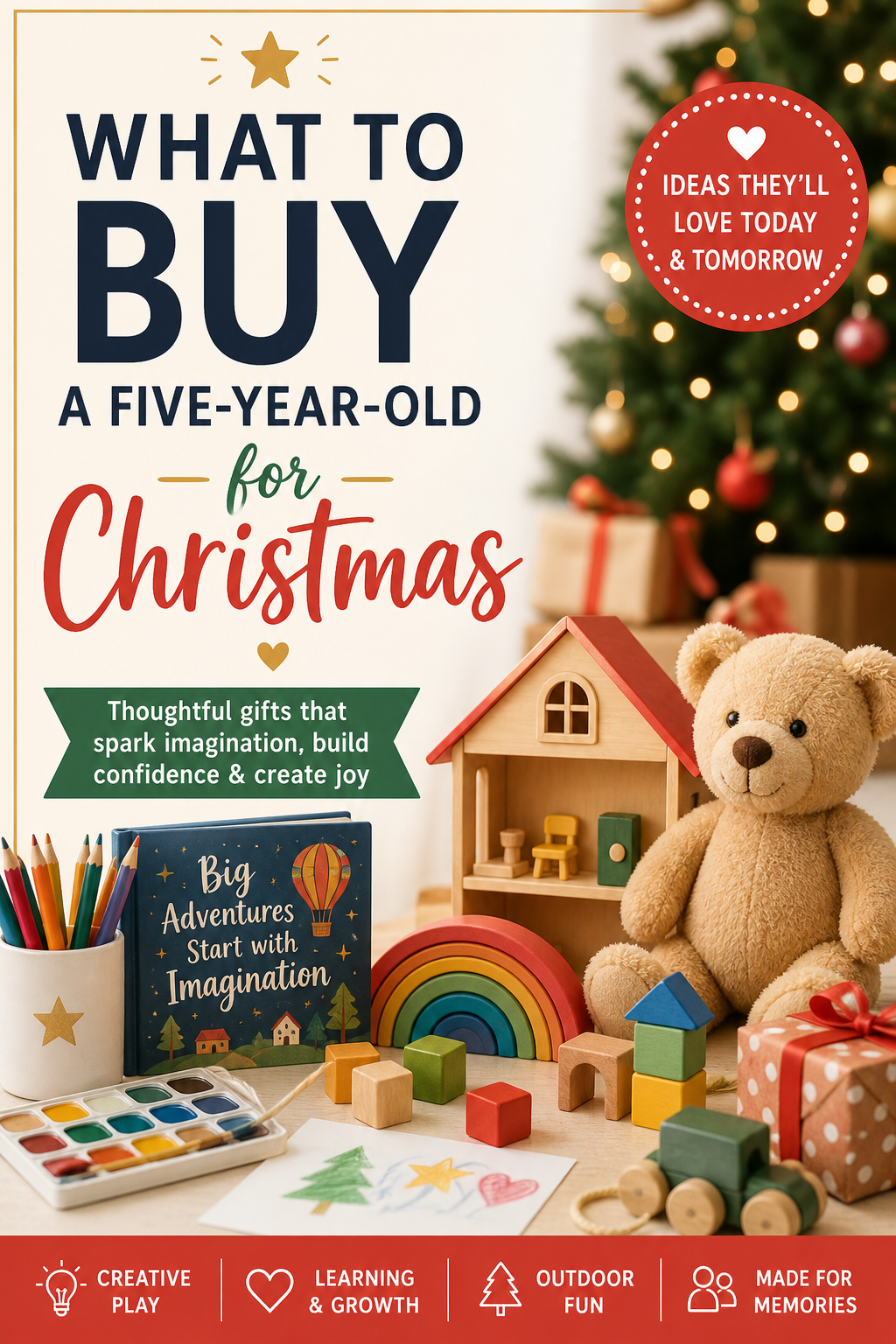
What to Buy a Five-Year-Old for Christmas (Even If You Don’t Have Kids)
A thoughtful, practical guide to choosing gifts that actually matter
Buying a Christmas gift for a five-year-old can feel surprisingly high-stakes—especially if you don’t have children yourself. You’re stepping into a world of rapidly changing interests, developmental milestones, and (let’s be honest) wildly fluctuating attention spans.
The good news? You don’t need insider parenting knowledge to choose something meaningful. You just need a bit of perspective on what five-year-olds are like—and what gifts truly resonate at that age.
🎄 Understanding a Five-Year-Old Mind
At five, children sit at a fascinating crossroads:
- They’re imaginative storytellers, often living in worlds they invent
- They’re developing independence and confidence
- They love mastery—learning to do things “by themselves”
- Their attention span is longer than toddlers’, but still… selective
This means the best gifts aren’t just fun—they invite participation, creativity, and growth.
🎁 Gift Ideas That Actually Work
1. Creative Play (The Gold Standard)
If you’re unsure, this is your safest—and best—category.
Think:
- Art kits (paints, markers, craft boxes)
- Building toys (blocks, magnetic tiles)
- Dress-up costumes
Why it works:
Creative gifts don’t dictate how to play. They give kids tools to invent their own worlds, which is exactly what five-year-olds crave.
2. “Real World” Role-Play Toys
Five-year-olds love mimicking adults. Not in a boring way—but in a “this is how I understand the world” way.
Good options:
- Toy kitchens or food sets
- Doctor kits
- Tool benches
- Shop/cash register sets
Why it works:
These toys help children process real-life experiences and build confidence through pretend independence.
3. Books (Yes, Still One of the Best Gifts)
Even in a digital age, books remain powerful.
Look for:
- Picture books with rich storytelling
- Early readers if they’re starting to read
- Interactive books (lift-the-flap, sound books)
Why it works:
Books create shared moments—with parents, siblings, or caregivers. You’re not just giving an object; you’re giving time and connection.
4. Games That Teach Without Feeling Like It
At five, kids begin to grasp rules, turn-taking, and simple strategy.
Try:
- Board games with short play times
- Memory or matching games
- Cooperative games (where players win or lose together)
Why it works:
These gifts subtly build social skills—patience, fairness, and resilience.
5. Outdoor & Active Gifts
Not every gift has to live indoors.
Ideas:
- Scooters or balance bikes
- Garden kits
- Sports sets (football, mini basketball hoop)
Why it works:
Five-year-olds have energy to burn. Gifts that encourage movement are often used more than flashy electronic toys.
🚫 What to Be Careful With
Some gifts seem like safe bets—but aren’t always ideal:
- Overly complex toys → frustration instead of fun
- Cheap novelty toys → exciting for 10 minutes, then forgotten
- Very loud or messy items → parents may silently curse your name
If you’re unsure, lean toward simple, open-ended, and durable.
💡 A Smart Trick (Especially If You Don’t Know the Child Well)
When in doubt, ask yourself:
“Does this gift let them do something, or just watch something?”
Always choose the former.
🎯 The Real Secret: You’re Buying an Experience
Here’s the part most guides miss:
A great gift for a five-year-old isn’t about impressing them in the moment—it’s about what happens after the wrapping paper is gone.
- Do they come back to it tomorrow?
- Does it spark imagination?
- Does it invite someone else to join in?
Those are the gifts that stick.
✨ Final Thoughts
You don’t need to be a parent to choose a meaningful gift for a five-year-old. In fact, being slightly outside that world can help—you’re less likely to overthink trends and more likely to choose something timeless.
So this Christmas, aim for something that:
- Encourages creativity
- Builds confidence
- Invites play (not passive use)
Because at five years old, the best gifts aren’t the biggest or the loudest…
They’re the ones that quietly become part of a child’s world.